
by Kenechukwu Nwobi
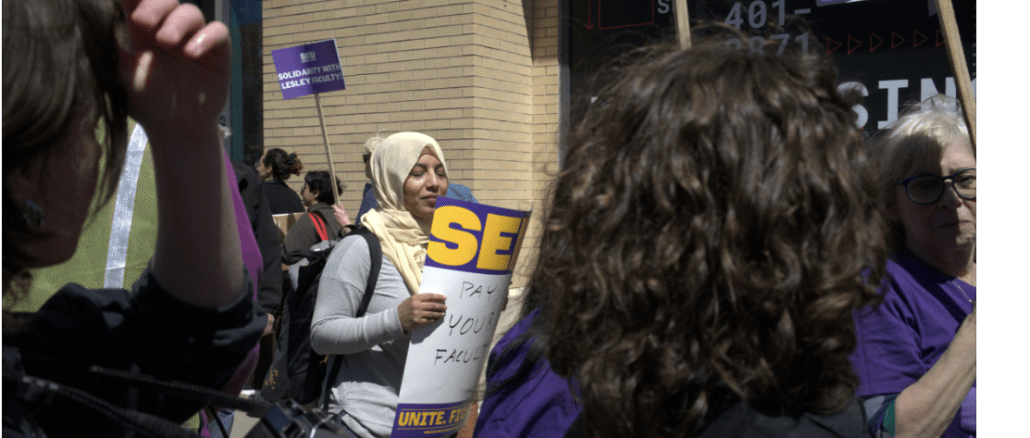
Faculty members at Lesley University announced a two-day strike that was set to begin on Tuesday after nearly two years of unsuccessful contract negotiations. The strike came during a period of financial instability for the university, declining student enrollment, and the recent announcement that the university president would step down. Faculty members stated that they had been asked to take on more responsibilities with fewer resources, creating unsustainable working conditions.
Catalina Tang, an assistant professor in counseling and psychology, explained that faculty members believed the strike was necessary to restore quality education and strengthen faculty voices within the university. She argued that when faculty lost influence in workplace decisions, students also suffered because the quality of learning was affected. Faculty members emphasized that the action was intended to place learning and education back at the center of the institution.
The strike involved 82 faculty members represented by SEIU 509, a union representing educators and human service providers in Massachusetts. Earlier in April, most faculty members voted to authorize the strike. The walkout was scheduled to begin at 1 p.m. Tuesday, followed by a rally. Faculty demands included livable wages, manageable workloads, and a successorship clause that would protect their union contract if the university were acquired by another institution.
In response to the strike authorization, the university stated that its goals had remained focused on supporting the academic community and reaching an agreement comparable to those at similar institutions. The administration also said it remained committed to continuing negotiations, maintaining stability for students, and helping them complete the academic year without disruption. However, the university did not provide additional comments after the strike announcement became public. In 2023, the school experienced a $10 million budget deficit, which resulted in layoffs, program cuts, votes of no confidence in the president, and the sale of 24 properties over three years. Enrollment had also declined by more than 30% between 2015 and 2022.