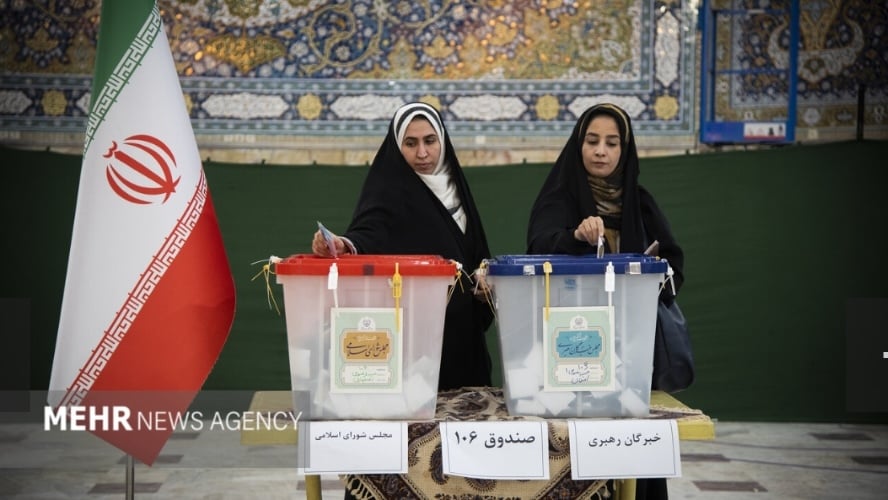
The illegal, unprovoked, and asymmetrical war of aggression against Iran launched by Israel and the U.S. since June 2025 has put the spotlight, to some degree, on the status of Iran’s women. With the U.S., Israel, and their monarchist supporters in the Iranian diaspora, claiming that women and girls are uniformly oppressed in Iran and that “regime change” would liberate them, it is worth examining some facts and figures about women’s lives. Iran is a large country with regional variation in ethnicity and religiosity, and with rich regional cultures that have deep historical roots. Thus, some of the details discussed below will vary by region as well as by social class.
Access to schooling has expanded impressively, even with the influx of Afghan refugees in the 1980s putting some pressure on classroom size and teacher capacity, and despite the heavy economic toll of years of U.S.-imposed trade and investment sanctions. (Those who know the costs to Cuba and its people from decades of U.S. sanctions, “the embargo”, will understand the impact on Iran.)
In the early part of this century, women’s university enrolments began to exceed men’s, with increasing access to prestigious STEM disciplines. In fact, Iran’s top two universities – the University of Tehran and Sharif University, Iran’s equivalent of Harvard and MIT respectively, but public rather than private, and free of charge rather than excessively expensive – have produced female graduates who have been recruited into PhD programs at major U.S. universities (including Boston’s Northeastern University, where I teach.) But young women in Iran also are studying the social sciences and humanities, including languages — often under professors trained in Europe or the U.S. — resulting in widespread English-language proficiency among that population. Their access to multiple-language social media complements their academic language training, and we often hear such young people interviewed on various media, whether complaining about economic difficulties and regime repression or condemning the illegal and destructive war against Iran.
The expansion of STEM knowledge among Iran’s educated female population is such that, in an unprecedented move, President Pezeshkian appointed a woman as Minister of Roads. (My late father, who had studied engineering at Tehran University, was a senior official in that ministry before the revolution and for a time afterwards.) Even under the conservative President Ahmadinejad (2005-11), three women served in his cabinet. Returning to President Pezeshkian, his progressive, forward-looking, and inclusive outlook also led to his appointment of Sunni-Muslim citizens to his cabinet, who represent a minority in an overwhelmingly Shia population.
Educational attainment, vastly improved health outcomes, and access to contraception have led to falling birthrates, such that the fertility rate is under replacement in Tehran and most major cities. As in other countries (e.g., Turkey, Tunisia, China, Italy, Spain) falling fertility may be a sign of women’s control over their own bodies, but it can raise policy concerns about the fiscal and social effects of a smaller youthful population versus a larger aging population. As a result, governments since at least the Ahmadinejad era have sought to create incentives for larger family sizes, although the war of aggression may have sidelined that policy priority.
Iranian women fall short on some other indicators, including labor market participation (FLFP). Women with higher education attainment are more likely to seek and attain jobs in the professions. Conversely, women with high school education or below are less likely to do so. The demand for female labor has fallen precipitously since the “maximum pressure sanctions” were instituted by the Trump regime in 2018. These have adversely affected state revenues as well as possibilities for job creation that might appeal to women. As a result, Iran’s FLFP rate declined by more than 30%, especially during the period of intense U.S. pressure, 2017–2020, to a mere 14% today. Additionally, the decline in state revenues led to a steep decline in women’s share of government jobs. Because aspects of labor law – such as Iran’s very generous 9-months paid maternity leave policy – do not necessarily extend to the private sector or are not enforced there, the growing private sector has been less preferred as a source of employment.
One issue that will need attention after war’s end will be adoption of policies to make workplaces more women friendly. Another will be constitutional and family law reforms to end discrimination and ensure women’s equality. Finally, Iran will need to adopt parliamentary quotas to ensure greater female representation and influence, especially as legal and policy reforms are being discussed.
The cycles of international pressure on Iran have been accompanied by cycles of protest within Iran. In addition to at least two waves of male-dominated protests against economic hardships over the past decade, the 2022 Woman-Life-Freedom protests revealed the intense feelings of anger toward discrimination, inequality, and the imposition of veiling (hejab). In the wake of the nationwide protests, and given the war of aggression, hejab is no longer mandatory or enforced. Women and girls walk fearlessly without hejab, attending school, sitting at cafés, shopping, and attending anti-war rallies in support of the nation. All this is easily visible on social media sites.
Iran not only has endured decades of colonialism, foreign interference, U.S. sanctions, and war but also waves of assassinations of nuclear scientists, generals, and top officials, launched by Israel and the U.S. These are, of course, illegal under international law, but the institutions of global governance have been weakened, as the Palestinian people have learned in the aftermath of Israel’s genocidal war. The Iranian government remains the world’s most vocal state supporter of the Palestinian cause – which is also a reason for Israeli and U.S. hostility. Iran’s response to the war of aggression has been to hit U.S. military bases across the Arab sheikhdoms near the Persian Gulf, and to seek an arrangement with Oman regarding international shipping in the Strait of Hormuz. Whatever one’s perspectives on these matters, it is important to acknowledge that they are Iran’s responses to the illegal 2025-26 war, the unilateral U.S. abrogation of the 2015 nuclear agreement, and the long years of harsh sanctions.
Iran’s economy, infrastructure, and citizenry have taken massive hits, but the country remains resilient and defiant, much like the Soviet Union after the 1941 Nazi German attack and North Vietnam during the American war. Let’s hope that the war of aggression against Iran comes to an end sooner than it did in those cases. Financial reparations, international cooperation, and global citizen solidarity will help Iran rebuild its damaged infrastructure so that Iranian women might again take part in meaningful legal and policy reforms, flourish, and thrive.
By Val Moghadam
Further reading:
- M. Moghadam. “The Gendered Politics of Iran-U.S. Relations: Sanctions, the JCPOA, and Women’s Security.” Third World Quarterly, vol. 45 no. 7 (April 2024): 1199-1218 https://doi.org/10.1080/01436597.2024.2314005.
- M. Moghadam. “Women, Peace, and Security in the Middle East: An Agenda of Empty Promises?” In Journal of Peace and War Studies, 5thed. (Oct. 2023): 36-59. journal-peace-war-studies-5th-edition (norwich.edu)
- Karshenas & V. M. Moghadam. “What Explains Iran’s Low Female Labor Force Participation? Examining Institutions, Wages, and Sanctions”. Sociology of Development, vol. 10, no. 4 (Dec. 2024): 401-31. https://doi.org/10.1525/sod.2023.0039
—
The opinions expressed in each article are those of the author and do not necessarily reflect the views of the organization.