
By Brian Garvey
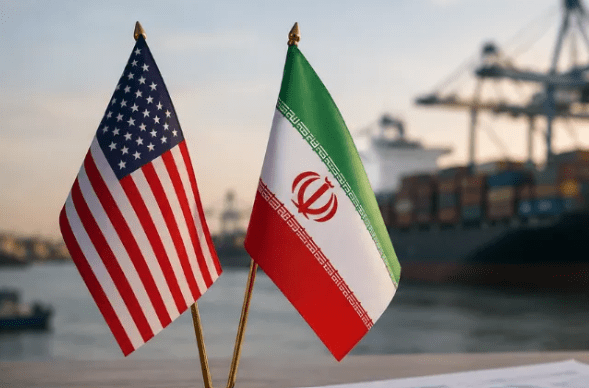
The United States and Iran have announced an initial agreement to extend their ceasefire and reopen the Strait of Hormuz. That is significant news. It is a step in the right direction. It is also not the end of the crisis.
We should be clear about what this agreement is, and what it is not. It is a 60-day ceasefire extension and a memorandum of understanding. It is not a peace agreement. Many of the excuses used to launch this illegal war remain unresolved. The hard work of diplomacy remains to be done.
And the damage is real.
President Trump launched this war on February 28, destroying active negotiations and dragging the United States into another catastrophic conflict without provocation and without congressional authorization. U.S. intelligence had consistently assessed that Iran was not building a nuclear weapon. Iran was not a threat to the United States. Congress never authorized these strikes.
From day one, this was an illegal war — a violation of the Constitution and international law.
The conduct of the war has also been criminal. Civilian neighborhoods were struck. Hospitals and infrastructure were destroyed. Over two-thirds of the buildings hit in Tehran were civilian targets. A double-tap U.S. airstrike on an elementary school in Minab killed 120 children.
Thousands of people in Iran, Lebanon, Palestine, Israel, the UAE, Saudi Arabia, Kuwait, Bahrain, Qatar, and countries across the region have been killed.
And for what?
The direct military cost of this war is already at least $30 billion. The true cost is likely many times that figure. With gas prices, inflation, shipping disruptions, and the national debt all rising as a direct result, the global economic damage may exceed $1 trillion.
None of that is erased by an agreement. None of it is undone by a signing ceremony. And we must not allow anyone in Washington to pretend otherwise.
At the same time, holding the Trump Administration accountable cannot mean reflexively opposing an effort to end the conflict through negotiations. Opposition to this war must be sincere and effective. That means a genuine commitment to diplomacy — not political point-scoring.
There will be voices in the Democratic Party who dismiss any agreement simply to deny Trump a win. Others will demonize Iran to appear tough. Some will act as though peace is only acceptable if it arrives on their preferred political terms.
That is not leadership. It is a disservice.
The people of Iran are not props in American politics. Neither are U.S. service members. Neither are American families who pay the price for war through higher costs, fewer public investments, and the constant diversion of resources from human needs to military destruction.
A just and lasting peace is worth supporting wherever it comes from. But supporting diplomacy does not mean giving the administration a blank check. It means holding this agreement to a high standard because we want it to succeed — not because we want it to fail.
First, Congress must cut off the funding. No taxpayer dollars should be used for unauthorized military action against Iran — not through the regular budget, not through supplemental appropriations, not through budget reconciliation, and not through the National Defense Authorization Act. If this war is going to continue in any form, Congress must vote on it openly.
Second, Congress must end weapons transfers to Israel. The United States should not provide offensive munitions to a government carrying out genocide in Gaza, violating a ceasefire in Lebanon, and attacking a country the United States was simultaneously negotiating with.
Third, Congress must oppose NDAA provisions that expand U.S.-Israel military cooperation or increase the Pentagon budget. At a moment when the national debt has surpassed GDP for the first time since World War II, Congress should not be shoveling more money toward endless war.
Fourth, Congress must support the diplomatic process. A lasting agreement requires addressing Iran’s legitimate security concerns, lifting the blockade, and ensuring that the people of the region — including the people of Gaza and Lebanon — are treated as part of the solution, not simply left in the wreckage.
Finally, Congress must demand accountability. War crimes were committed. Civilians were killed. Hospitals were destroyed. A school was targeted. Children were massacred.
This agreement may open the door to peace. But peace will not come from one memorandum of understanding. It will not come from pretending the war never happened. It will not come from rewarding the same militarism that brought us here.
Peace will require diplomacy, accountability, and a fundamental break from the failed logic of endless war. That is what Congress should be saying, and that is what the peace movement must continue to fight for.
A ceasefire is not peace. A pause in the bombing is not justice. A diplomatic opening is not an excuse to look away.
Now is the time to stop the Iran and Lebanon wars, end U.S. military support for Israel’s genocide in Gaza, cut the Pentagon budget, and choose diplomacy over destruction.
—
Brian Garvey is the Executive Director of Massachusetts Peace Action