
By Brian Garvey
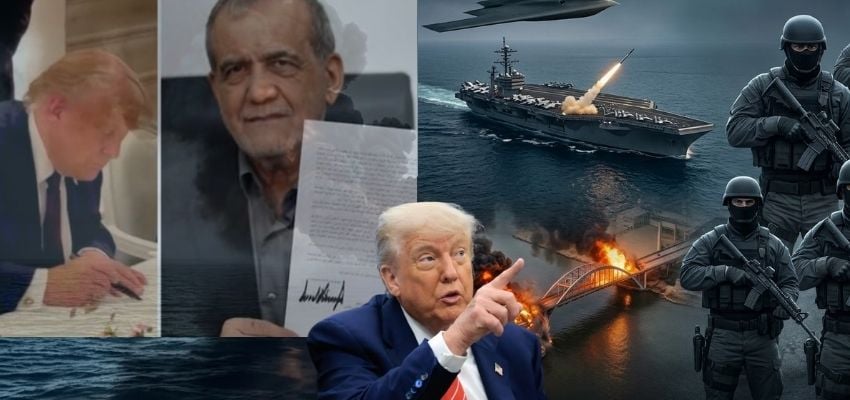
For a brief period, the Trump administration changed its tone.
The United States and Iran signed a memorandum of understanding. The fighting paused, the Strait of Hormuz began to reopen, and negotiations continued. Trump criticized some Israeli military actions, while Vice President JD Vance attacked Israeli officials determined to undermine the agreement.
There was a real diplomatic opening, and everyone who wanted to prevent more death had an obligation to defend it.
But there was never much reason to trust Trump.
The memorandum was not a peace agreement. It did not resolve the conflict, repair the devastation, or guarantee that the administration would keep its word. Trump had already withdrawn from the previous nuclear agreement even though Iran was complying with it, and he continued making military threats during negotiations.
His criticism of Israel was narrow and self-interested. Trump and Vance were not objecting to the destruction of Gaza, the occupation of Palestinian territory, attacks on Lebanon, or violations of international law. They were angry because Benjamin Netanyahu’s government was interfering with Trump’s plans and threatening his claim to have ended the war.
There was a chance to move away from war. That did not mean Trump had become a peacemaker.
Now even that limited opening is collapsing.
American attacks on Iran have resumed. Iran has again attacked American facilities and commercial shipping. The Strait of Hormuz is once more becoming a battlefield. Trump is threatening an “eye for an eye” response, including destroying an Iranian bridge or power plant for every attack on shipping.
That is a promise to attack civilian infrastructure on which millions depend.
Iran’s attacks on commercial vessels and its attempt to close the strait are wrong and dangerous. But more American bombing will not protect civilians, stabilize shipping, or create lasting peace.
The war was a war of choice launched by the United States and Israel. Diplomacy offered a chance to contain the destruction. Instead, the administration has returned to threats, blockades, bombing, and the false claim that the president can wage war without Congress.
The Trump administration is reverting to the mean: militarism, coercion, impunity, and cruelty.
We can see the same approach inside the United States.
On July 7, an ICE officer in Houston shot and killed Lorenzo Salgado Araujo, a 52-year-old Mexican construction worker driving his crew to work. He was not the person ICE was looking for. Officials claimed he used his van as a weapon, but passengers disputed that account. No available body-camera footage independently established what happened.
Six days later, an ICE officer killed Johan Sebastián Durán Guerrero in Biddeford, Maine. He was a 25-year-old Colombian man, a partner, and the father of a young child. He was reportedly authorized to work in the United States. He was also not the person ICE initially set out to find.
Undocumented immigrants have human rights too. But these killings expose the lie that the administration is merely enforcing immigration law. ICE operations have swept up legal immigrants, asylum seekers, refugees, green-card holders, American citizens, workers, witnesses, protesters, and bystanders.
These killings are the foreseeable result of building a federal immigration force around masked agents, unmarked vehicles, military-style tactics, racial profiling, secrecy, surveillance, and impunity.
The administration wants the public to see this as normal law enforcement. It is not.
What we increasingly see is a domestic paramilitary force: heavily armed, often masked, centrally controlled, and sent into communities over local objections. Agents frequently refuse to identify themselves and operate with little accountability. They have also surveilled, threatened, detained, and injured activists, legal observers, journalists, and residents documenting their conduct.
A government does not create a large, armed, politically protected force, train it to disregard local accountability, and reliably confine it forever to one purpose.
The powers created for use against immigrants can be used against protesters and political organizers. Forces deployed into immigrant neighborhoods can be used to intimidate voters. They may come first for immigrants, but they will not stop there.
Prominent Trump allies have discussed deploying ICE or other federal agents around the 2026 elections. Imagine armed, masked agents standing outside polling places in immigrant neighborhoods after months of raids, shootings, detentions, and racial profiling.
They would not have to seize a ballot box. Their presence alone could frighten American citizens away from voting. These forces could also intimidate organizers, disrupt voter registration, target demonstrations, detain activists, or manufacture disorder to justify repression.
That is why the struggles against militarism and authoritarianism cannot be separated.
The same government that treats Iranian civilians as collateral damage treats immigrant workers as enemies and political activists as internal threats. Abroad, it promises safety through bombing and blockades. At home, through masked raids, mass detention, surveillance, and armed federal deployments.
In both cases, fear justifies lawlessness. Executive power grows while democratic accountability is pushed aside. We are encouraged to tolerate violence because it is supposedly directed against somebody else.
But the machinery of violence does not remain confined to somebody else.
The administration is also pushing for a $1.5 trillion military budget: roughly $1.15 trillion in regular spending and another $350 billion in mandatory funding. The Pentagon repeatedly fails audits while contractors collect enormous profits and ordinary people are told the country cannot afford healthcare, housing, education, environmental protection, or reliable transportation.
There is never enough to house the homeless, feed hungry children, rebuild public transit, or confront climate change. But there is always more for bombs, missiles, detention centers, surveillance systems, and armed federal agents. That is no accident. It reflects the priorities of those in power, both political and corporate.
At the same time, Congress is considering proposals to deepen military ties between the United States and Israel. These provisions would further integrate military research, weapons development, technology, intelligence, industrial production, and strategic planning, embedding Israel’s military priorities more deeply in American foreign policy. Trump can complain about Netanyahu one week and deepen military integration with Israel the next because their disagreement was never about Palestinian, Lebanese, or Iranian lives. It was about tactics, timing, and control.
The pattern is clear: war abroad, repression at home, unlimited resources for military contractors and security agencies, contempt for Congress, and the dehumanization of anyone placed on the wrong side of American power.
If it wants to be taken seriously as a coequal branch of government, Congress must invoke the War Powers Resolution and end unauthorized American participation in the war with Iran. It must reject additional war funding, oppose the proposed $1.5 trillion military budget, remove provisions deepening military integration with Israel, and stop sending weapons used to attack civilians and violate international law. It must also stop the expansion of ICE and CBP, demand independent investigations into the killings in Texas and Maine, and establish real consequences when federal agents abuse their power.
Opposing militarism is not only about people in distant countries. Opposing authoritarianism is not only about abstract constitutional principles. We are defending our neighbors, our communities, our democratic rights, our families, and ourselves.
The machinery of violence built for use against others will eventually boomerang back. In many American communities, it already has.
—
Brian Garvey is the Executive Director of Massachusetts Peace Action