
Today, it is nearly impossible to go a day without hearing about U.S. foreign policy. Words of “peace talks” and “negotiations” continue to be thrown around by various news outlets, yet these claims also continue to be countered by other nations and world leaders, who offer different narratives of what is being said, or question whether discussions are even taking place at all. Whether you’re looking at U.S. foreign policy in the Middle East or in Europe, diplomacy and negotiations are evidently at a stalemate. While this exhausting pattern may seem new, it actually has persisted among multiple administrations, proving that Washington may not be as influential in foreign diplomacy as it believes itself to be.
When the U.S. and Israel launched strikes on Iran on February 28th, 2026, the U.S. ultimately determined itself to be directly involved in the conflict. An agreement to a two-week ceasefire was proudly announced by Trump on April 7th, yet the ceasefire was largely brokered by Pakistan, highlighting the gap between the leverage the U.S. proclaims to have and the leverage it actually wields. Furthermore, that ceasefire was not only temporary, but also not fully executed with various violations such as Israel’s strike on Beirut according to Iran. Iran’s Foreign Minister said a broader agreement was “just inches away,” but criticized “maximalist” demands from U.S. negotiators. On June 1st, Iran expressed a halt to messages with the United States, declaring that the “U.S. and Israel bear responsibility for the consequences of any breach of the truce.” Trump disputed this, insisting talks were continuing at a “rapid pace”, a contradiction that encapsulates the problem of two parties offering two distinct accounts. Moreover, as U.S. ally Israel continued to operate without restraint in Lebanon in recent weeks despite the ceasefire and contributed to the most intense escalation in the conflict since the April truce, Trump maintained that a peace deal is on the horizon, exposing Americans to the harsh truth that the U.S. may not be as effective a mediator as it asserts. On June 8th, the Iranian military allegedly agreed to stop strikes on Israel, but only if Israel refrains from striking Lebanon. These developments have added to the unpredictability of the hostilities, as well as the public’s lack of trust in the United States’ ability to settle them. Foreign policy analyst Thomas Graham has warned that “you have to have a negotiating process, and that is still missing,” arguing the administration has relied too much on “episodic phone calls or visits of special envoys…without the day-to-day engagement of traditional diplomacy to keep talks moving.” As of June 14th, the United States and Iran have reached a preliminary deal that is expected to open the Strait of Hormuz after its 10 week blockade, consisting of a 60 day ceasefire during which negotiations will take place for a final peace agreement. A memorandum of understanding is set to be signed in Switzerland on Friday, June 19th. While marking a step in the right direction, the JCPOA took roughly 20 months to negotiate, casting doubt on whether a 60-day window can yield a comprehensive deal that both sides will embrace — especially as Iran has stated negotiations will not begin until the U.S. first fulfills its obligations under the memorandum. It is also important to note that it is unclear if Israel is required to withdraw from Lebanon under this deal, a pressure point that Iran cited earlier as the reason for the broader agreement falling apart, and one that remains unresolved as Israeli Defense Minister Israel Katz has since declared Israel will keep troops in southern Lebanon indefinitely. This ultimately raises the question of whether this deal genuinely ends the issue or simply defers the same crisis.
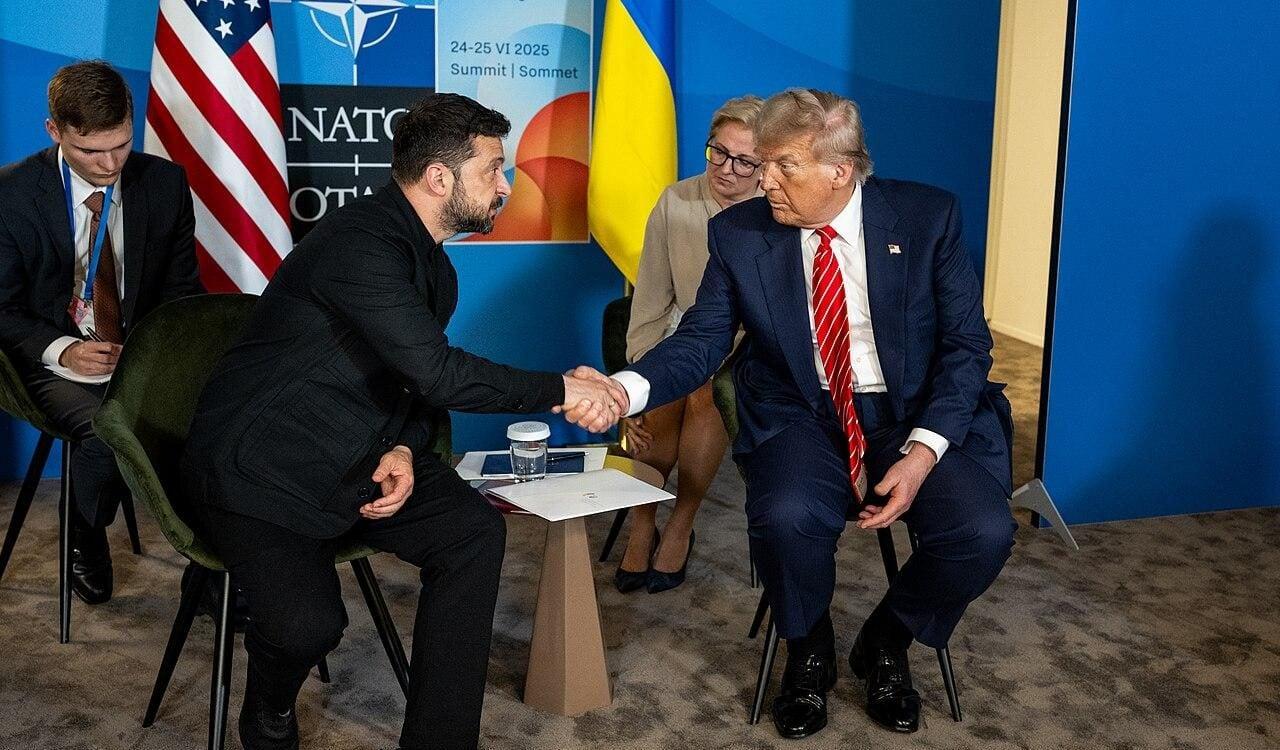
In terms of the Ukraine war, Trump notoriously claimed he would end it within 24 hours of taking office. Nearly a year and a half later and four years into the conflict, he has yet to live up to his claims. In April, a 32-hour truce proposed by Zelenskyy for Orthodox Easter was agreed to by Putin, but collapsed amid continued hostilities. On May 8th, President Trump declared a three-day ceasefire between Russia and Ukraine due to Russia’s “Victory Day” parade, which also included a prisoner swap. However, this situation echoed a similar breakdown to the Iran ceasefire as both Russia and Ukraine accused the other of violating the truce with strikes.
Ukraine has increasingly taken the Russian conflict into its own hands. With less aid being sent from the U.S. under the Trump administration, Ukraine has worked to develop its own long-range strike capabilities. The country’s most effective attacks yet were carried out in April and May, with its drone units now conducting “middle strike” attacks on Russian logistics targets as far as 60 miles from the frontline, targeting refineries, storage tanks, and export facilities. As of today, most of the damage is the result of weapons that are Ukrainian-made. Additionally, Ukraine has begun to rely on France for satellite and aviation intelligence for accurate targeting. While the frontline remains fluid due to Russia pressing assaults on fortified cities in Donetsk and advancing in Sumy and Kharkiv, Ukraine has managed to stabilize its defensive lines and conduct effective counterattacks without U.S. direction. This all demonstrates that Ukraine no longer needs U.S. direction to advance its position.
While false claims are not unfamiliar to the Trump administration, it’s important to note that this is a systemic issue as well. The Biden administration opposed a full ceasefire in Gaza, even discouraging the word “ceasefire” among its own officials. The administration instead worked to facilitate a “pause” to assist with the delivery of humanitarian aid. Biden frequently blamed Hamas for the failure of ceasefire talks, yet did not publicly hold Netanyahu accountable for the decisions that allowed the conflict to drag on, shedding light on a pattern of shielding an ally from scrutiny that limited the U.S.’s credibility as a neutral broker. The current administration has followed a similar script in Iran by beginning as a potential negotiator, then becoming a direct participant in the bombing, and now struggling to reestablish itself as a mediator. Unmistakably, the role of an honest and peaceful mediator is difficult to play when you are also an aggressor.
As Americans have become accustomed to frequent promises of resolutions and agreements to these conflicts, the question of whether the U.S. government even wants a ceasefire can’t help but arise. Sustaining the arms industry, maintaining geopolitical positioning, and preserving alliance relationships all create incentives that can quietly work against the urgency leaders perform in public. At this point in time, disappointment regarding U.S. action and success in diplomacy in these conflicts is expected. To the general American public, alleged “negotiations,” “talks,” and “ceasefires” have become a pattern of vows being made but not met, illustrating the U.S.’s lack of diplomatic follow-through. Yet, people and communities in these regions face the catastrophic impacts of these stalled diplomatic efforts. Civilians continue to die and be taken hostage, infrastructure is damaged, and families are torn apart. While the White House repeatedly insists a settlement is imperative in these conflicts, conciliatory conversations fail to bring those promises to fruition.
by Gabby Griffin-Fetsch