
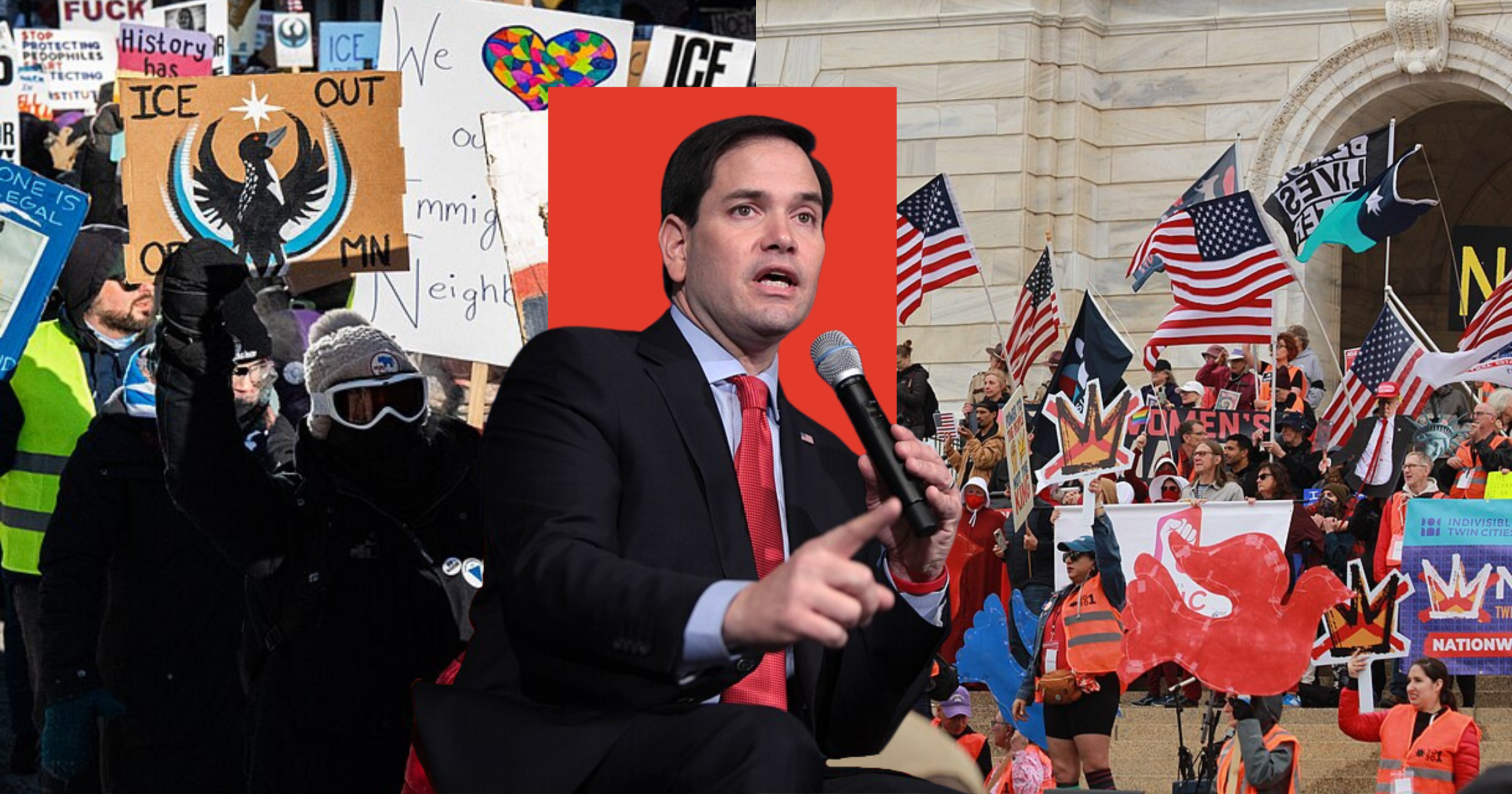
At the Munich Security Conference, July 16th, 2026, Secretary of State Marco Rubio delivered a speech on “political terrorism.” Unlike other speakers at this conference, Rubio chose to focus on the efforts of the United States to quell the “encroaching darkness” of “far-left terrorism.” As of now, far-left terrorism is one of only three types of terrorism the Trump administration has honed in on, the others being “narco-terrorism” and “Islamic terrorism.” Up until last year, right-wing terrorism encompassed a strong majority of ideologically motivated terrorism, with far-left terrorism pulling ahead by 4 incidents in 2025. According to the Center for Strategic and International Studies, “the rise in left-wing attacks warrants increased attention, but the fall in right-wing violence is likely temporary and requires a government response as well.” As of today, whether far-left terrorism is as high on the list of US safety threats as Rubio depicts is a separate discussion altogether. What was also gravitating about Rubio’s speech, however, was the manner in which he identified these left-wing extremists: naming different left-wing ideologies and labeling them a cloak to hide “a poisonous resentment.” These ideologies included communism, Marxism, anarchism, and, notably, anti-imperialism, which has concerning implications.
Anti-imperialism in the US is a homegrown, historically pertinent ideology. American patriotism is based on the principle of resisting empire and declaring the rights and freedoms of a people to be invaluable compared to imperial fealty; this principle is well-embodied in the Declaration of Independence. Though some might argue that early Americans saw anti-imperialism differently than Americans of today, many historians agree that Americans have historically aligned themselves with anti-imperial struggles despite their government’s actions. Quintessential moments of American history like the Revolutionary War, or even anti-war movements in response to the Vietnam and Iraq Wars, are examples of this: the will of the American people to resist the burdens of imperialism at home and abroad in spite of the actions of their government — claiming resistance to empire as a fundamental creed. Though the American government has historically pursued imperial endeavors, the American citizenry has consistently spoken against its government’s aggression when they believed it trampled this essential virtue. It is thus incongruous for Rubio to place this virtue in the same light as other left-wing ideologies that most Americans don’t identify with and that, though popular in Europe, have found substantially less grounding in the States.
Anti-imperialism has also remained a pertinent component of the political zeitgeist here in Massachusetts, the birthplace of the American Revolution. MAPA currently supports various anti-imperialist initiatives, such as the Massachusetts Indigenous Legislative Agenda, which demands the removal of racist mascots, the renaming of Columbus Day as Indigenous Peoples Day, Native American culture & history taught in schools, the protection of objects of Native American heritage, and improving educational outcomes and opportunities for American Natives. This agenda aims to better the lives of Native Americans in Massachusetts by both remedying and acknowledging the damage of imperialism. These incentives are anti-imperialist, non-violent, and reflect a strong anti-imperialist sentiment closely tied to the consistent political activism of many Americans. Rubio’s warning of anti-imperialism as a cloak for domestic terrorism, at least in the USA, is ill-equipped to define terror groups given the cultural zeitgeist of the country.
What then, was Rubio’s goal in portraying anti-imperialism as a means for terrorists to give their insidious agenda a fresh face of makeup? One thing many reporters acknowledged was how closely Rubio’s tone towards these ideologies matches President Trump’s when referring to left-wingers in the states who oppose his administration. Specifically, it closely resembles Trump’s labeling of anti-imperialists as “delusional” or “ANTIFA terrorists” – an odd choice, seeing as ANTIFA (an abbreviation for anti-fascism) is not one big organized group, but rather a movement made up of local groups and individuals within certain cities whose interests may/may not align, and who most often adhere to non-violent means of protests/counterprotests. Through this, Trump propagated the idea of an abstract, obscure enemy, said to be both foreign in origin and homegrown, which the administration blames for the country’s ailments. It could be that Rubio’s aim in framing anti-imperialists as one component of a larger category of groups linked to terrorists has less to do with the fact that he genuinely believes this is an effective way of identifying/categorizing far-left terrorists, and more to do with trying to validate Trump’s blanket statements. He does this by leveraging the President’s broad generalizations to create guilt by association within dissenting crowds. In other words, by stating that some anti-imperialists are terrorists, Rubio implies one should be wary when engaging with anti-imperialist movements, even though the overwhelming majority of anti-imperialists and anti-imperialist groups in the US are not linked with violence or terrorism.
The enforcement of Rubio’s rhetoric is well exemplified by the Trump administration’s recently issued National Security Presidential Memorandum entitled “Countering Domestic Terrorism and Organized Political Violence.” This memorandum, well stated by the ACLU (American Civil Liberties Union), “stitches together a few disparate, serious acts of actual or attempted criminal conduct with First Amendment-protected beliefs and protests against the president and his policies, and wrongly conflates them as ‘political violence.’” This is accompanied by instructions for police authorities to target and investigate civil society groups, nonprofits, and donors who sympathize with various left-wing ideologies and beliefs protected by the First Amendment.
The Trump administration has thus made it clear that it aims to target and disrupt any coordinated efforts to speak out against its atrocities, both at home and abroad, and is actively pushing to encapsulate a sweeping range of its opposition into its interpretation of “terrorism.” Anti-imperialism is a proud American tradition, and it lies at the crux of American patriotism. Rubio’s rhetoric attempts to warp this tradition into something Americans should fear and distance themselves from, else they will be tangentially closer to a domestic threat and potentially targeted as a result.
In an era when imperialists seem to be rising to power in our government — urging wars of aggression and supported by the dissolution of democratic safeguards —it is vital to recognize and address this distortion.
By Ali Issa Asad
—
Ali Issa Asad is an undergraduate student at Northeastern University who studied as an International Student Researcher at the UN Office in Geneva, Switzerland, and currently interns at MAPA.