U.S. foreign policy has long had the tendency of treating third world countries as something less than sovereign nations and partners. From practicing regime change to flexing its economic dominance, the U.S. has used its powerful global position to enforce its will in sovereign third world countries. The recent Trump Administration policies surrounding the outbreak of Ebola in the Democratic Republic of the Congo (D.R.C.) is a microcosm of this attitude towards less powerful states.
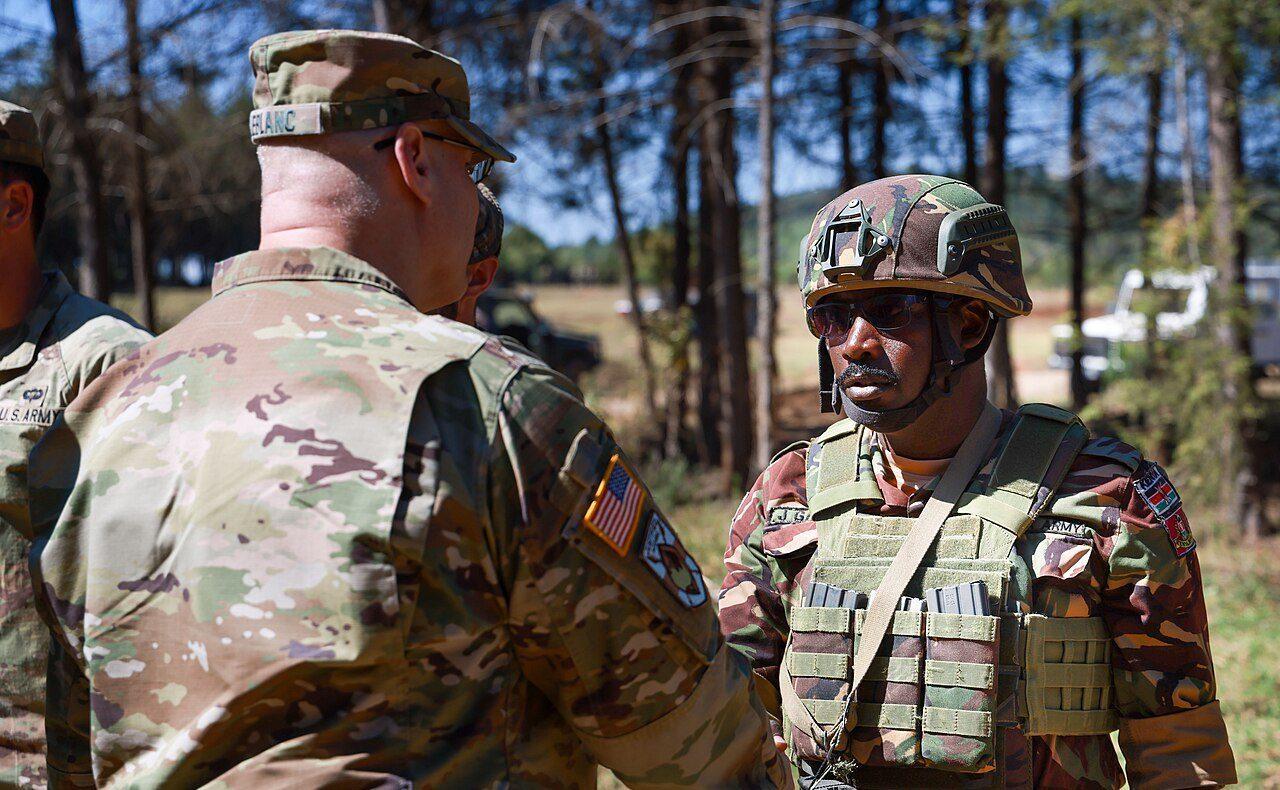
Two weeks ago the administration barred U.S. citizens and residents who are exposed to Ebola from entering the country in a stark departure from earlier practice, where exposed persons would be brought back to the U.S. for treatment. Instead, the administration intends to move any U.S. citizens or residents exposed into a new quarantine facility in Nanyuki, Kenya in what Kenyan president William Ruto called on June 1st “an agreement and partnership with friends.”
There has not yet been an Ebola breakout in Kenya, rather the facility is meant for Americans exposed in the D.R.C. and would not be available to Kenyans. This has prompted Kenyan analysts to question what the upside is for Kenya, such as Tom Mboya who told the New York Times that the lack of transparency is leading to suspicion from the public.
On Monday June 1st, protestors gathered in Nanyuki, Kenya to oppose the construction of the new quarantine facility. They showed out in protest to the facility barring Kenyans and to voice fears that the facility may endanger the town. One sign at the protests read “Laikipia is not a dumping site,” Laikipia being the name of the county. The protests were suppressed by Kenyan police, who fired tear gas into the crowd of hundreds of people and killed at least two.
?? Taking a look at the Instagram comments under President Ruto’s discussions on the facility, one can see how many Kenyans feel about the American quarantine unit. Comments are overwhelmingly negative, with one asking Ruto “Do you work for Kenya or the U.S.?” And others decried that Ruto did not consult the public.
Ruto justified the construction by claiming that the U.S. “has supported us,” and referencing prior help from the U.S. with combatting disease. The new facility, however, comes in the wake of the USAID cuts made by the Trump administration, cuts that have severely hampered the response to this most recent Ebola outbreak.
Ruto claims that the new facility is part of a “partnership” between the U.S. and Kenya, but the move reads much more like an expression of U.S. hegemony, and many Kenyans- like the ones protesting the facility and commenting on President Ruto’s social media- see it that way. With USAID cuts worsening the crisis in Central Africa it is hard to see how this facility could benefit Kenyans. One can imagine the outrage that would arise in the U.S. if the Kenyan government were allowed to build an Ebola facility here for only their citizens.
Kenya has not yet had an outbreak of Ebola, but fear of the disease with a 50% mortality rate is strong there. The country borders the D.R.C., where Ebola outbreaks are more common and where the current outbreak is concentrated. The facility is primarily designed for American nationals exposed to the disease while in the D.R.C. In a June 3rd statement, the U.S. Embassy in Kenya claimed the facility “does not pose risk to nearby communities. A Marco Rubio spokesperson stated that the White House intends to give $13.5 Million in aid to Kenya to fight Ebola, but this has done little to quell anxieties in a country which has not yet been exposed to Ebola and fears the facility may do so.
On Tuesday June 2nd, Kenyan courts delayed the construction of the facility in response to public backlash and health concerns. Justices declared the need for a more thorough review of the agreement, as well as time for petitions and advocacy groups in the country to make their cases. In its statement, the U.S. Embassy in Kenya stated that they are “actively working with the?Kenyan?government to resolve any objections and?communicate?our shared objectives to the Kenyan?people.”
The behavior of the Trump administration in this case is far less dismal than in the unprovoked war on Iran or the illegal overthrow of Nicolás Maduro, however it follows a similar logic. The logic that immediate U.S. interests override nations’ sovereignty, and that potential or actual harm to local communities is not worth much consideration. This attitude is sure to produce more resentment for the U.S. in places like Kenya, and further deteriorate the U.S.’s global image.
By Finn Smith