
by Abigail Greenblatt
As February 24th approaches, so does the fourth anniversary of the war in Ukraine. What Russian forces intended to be a swift invasion has become a grinding conflict claiming hundreds of thousands of lives on both sides. As the EU doubles down on calls for rearmament with an €800 billion defense plan and NATO continues its eastward expansion, we are witnessing the militarization of Europe not seen since before the formation of the European Union. Yet this approach, far from deterring conflict, has created a dangerous escalatory cycle that makes diplomatic resolution increasingly difficult. As the last remaining nuclear arms treaty between the U.S. and Russia expired last week, understanding how we reached this dangerous moment is essential to charting a different course.
The Intertwined History of the Contentious Neighbors
Russia and Ukraine share a complex history that goes back over a thousand years, enduring through countless invasions, occupations, and annexations that repeatedly reformed the territory of modern Ukraine. In the 17th century, a war between the Polish-Lithuanian Commonwealth and the Tsardom of Russia brought the Ukrainian lands east of the Dnieper River, including what is now known as the Donbas region, under Russian control, leaving the western lands in Polish hands. Much of Western Ukraine was later incorporated into the Russian Empire, and in subsequent years, the borders of various regions of Ukraine shifted as imperial and state frameworks changed. Following the Russian Revolution and the Bolsheviks’ rise to power in the 20th century, Central and Eastern Ukraine became the Ukrainian SSR, a founding republic of the Soviet Union. It wasn’t until later that other major regions of present-day Western Ukraine were incorporated into the Soviet Union. It is within this intertwined history that we gain insight into the lasting fault lines between the two countries.
These regional differences were further complicated by the Soviet Union’s collapse. Because different regions of Ukraine followed different historical trajectories, it is impossible to expect everyone in the country to share the same narrative, and during the collapse of the Soviet Union, some looked back fondly, while others fought tooth and nail for Ukrainian independence. In a nation that had been cut up and pieced together time and time again, these competing narratives of the Soviet legacy found a home in Ukraine. Yet, despite internal divisions, Ukraine’s path forward should be determined by Ukrainians alone.
Formal independence allowed a distinct national identity to strengthen over the following decades, particularly as Russia sought to maintain influence over its former Soviet territory. The more Russia tried to maintain its grip on the Ukrainian people, the farther they strayed, and the closer they coalesced around demands for democratic governance and closer European integration. In 2004, after what many people saw as a rigged election that allowed a Russian-backed candidate to win, millions of Ukrainians took to the streets to protest, in what became known as the Orange Revolution. The mass protests forced the rerun of the presidential vote, allowing the opposition candidate, Viktor Yushchenko, to win. This moment set the country on a path towards closer ties with Europe, diverging from Putin’s Russia, and appeared to cement Ukraine’s commitment to democracy. This revolution marked a turning point in Russian relations with the West, as Moscow viewed Western support for the protests as interference in its sphere of influence, putting the country on an increasingly confrontational path on the world stage.
The years following the Orange Revolution saw Ukraine oscillate between pro-Western and pro-Russian leadership, with Yanukovych, the same Moscow-favored candidate who sparked the 2004 protests, winning the presidency in 2010. When he abruptly abandoned an EU association agreement in 2013, Ukrainians once again mobilized in massive protests known as Euromaidan. The protests, also referred to as the “Revolution of Dignity,” continued into 2014, when the government began cracking down on demonstrators, and Yanukovych ultimately fled Ukraine and later ended up in Russia. Amid the upheaval, unmarked Russian soldiers invaded Crimea, seizing buildings and checkpoints, paving the way for a swift Russian annexation of the Crimean Peninsula. Shortly after, pro-Russia separatist activity spread to the eastern Donbas region, resulting in the self-declared People’s Republic of Luhansk and Donetsk. The southern and eastern parts of the country, where Crimea and the Donbas lie—the same regions that came under Russian control centuries earlier—hold particular significance for Putin, a significance many attribute to an imperial worldview that regards these lands as inherently Russian.
Inevitable Invasion?
Understanding this history may seem like Russia’s 2022 invasion of Ukraine was inevitable, but that is not the case. Instead, several moments since 1991 set the stage for the fateful night of February 24, 2022. Well before the collapse of the Soviet Union, NATO was founded to deter Soviet aggression, and, in the wake of that collapse, the Soviet Union’s counter-alliance, the Warsaw Pact, was dissolved. Since then, NATO has expanded eastward into the former Soviet bloc, which Putin has characterized as a threat to Russian security. A pivotal moment came in 2008, when NATO declared that Georgia and Ukraine would eventually become members. A few months later, Russia and Georgia went to war, and six years after that, following the Euromaidan protests and political unrest that forced out the pro-Russian government, Russia invaded and annexed Crimea.
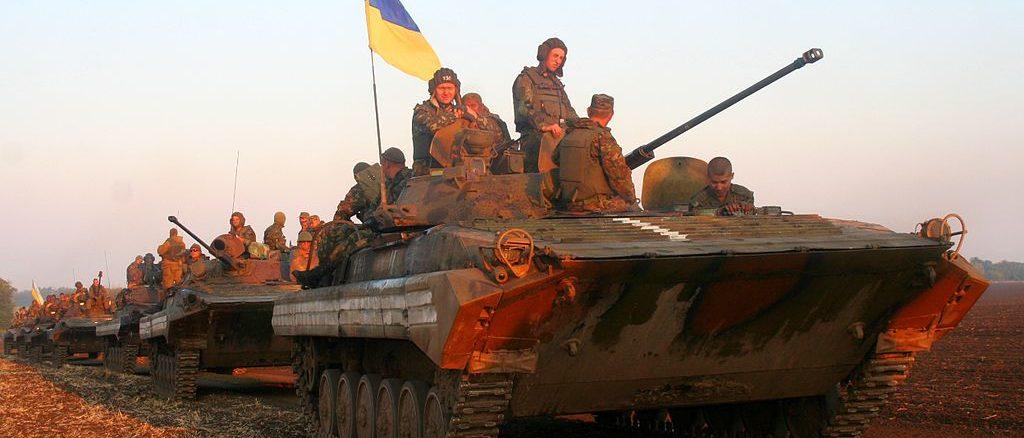
The years between Russia’s annexation of the Crimean Peninsula and the 2022 invasion were tumultuous at best, and despite two ceasefire agreements, the fighting continued. Russia ultimately launched a full-scale invasion of Ukraine in February 2022, and the fighting persists to this day. NATO has been providing military assistance, supplies, training, and other vital support to Ukraine, which Russia views as direct involvement in the conflict. To provide such aid, EU defense spending is experiencing a historic surge, thereby facilitating the militarization of Europe. In 2025, the EU released its €800 billion “ReArm Europe plan” to increase defense capabilities by 2030 in response to security threats, particularly Russia’s invasion of Ukraine. Before this plan was released, EU states had already spent €343 billion in 2024 alone, a figure 2.7 times higher than Russia’s €126.9 billion. Furthermore, between 2020 and 2025, member states’ defense expenditure increased by 62.8%, driving an unprecedented militarization across the EU.
While European nations dominate defense spending relative to Russia, a heightened focus on defensive capabilities has historically fueled conflict, and the current situation is no different. Putin has repeatedly expressed frustration over Europe’s militarization, the ReArm Europe plan in particular, and indicated that it will be taken into consideration with Russian military planning. This creates a dangerous cycle: European military buildup prompts Russian countermeasures, which in turn justify further Western militarization, steadily raising the stakes while making diplomatic resolution harder to pursue. This comes on top of changes Russia has already made to its nuclear doctrine in 2024, lowering the threshold for nuclear weapons use to allow a nuclear response to a broader range of conventional attacks. These developments coincide with an especially precarious moment: the last major nuclear arms agreement between the U.S. and Russia, New START, just expired on February 5th. With both sides racing to develop new weapons systems and no remaining constraints on nuclear arsenals, the risk of nuclear catastrophe has never been more acute.
The past four years have proven that militarization prolongs suffering rather than ending it. Hundreds of thousands have died on both sides, Ukraine’s infrastructure lies in ruins, and millions have fled, yet the international response continues to prioritize arms over diplomacy. Rather than bringing peace closer, this approach has created an escalatory spiral that makes negotiated resolution increasingly difficult. Diplomatic solutions exist, but they require prioritizing negotiation over militarization and humanitarian need over defense industry profits. As the grim anniversary approaches, the question is whether policymakers will finally choose the harder work of peacemaking over the familiar path of war.
—
Abigail Greenblatt is currently studying International Affairs and History at Northeastern University and is a MAPA intern.