
by Rosemary Kean
The observance and celebration of Black History Month in 2026 has a special significance for at least two reasons. First is the fact that this year is the 100th anniversary of the tradition of raising up Black history in the month of February. In 1926 historian Carter G. Woodson and the Association for the Study of Negro Life and History designated the second week of February as Negro History Week. They chose that week because it includes the birthdays of both Abraham Lincoln and Frederick Douglass. Lincoln was born on February 12 and Douglass, who like many formerly enslaved people did not know his birth date, chose February 14 to observe it.
Then, 43 years later in 1969, Black faculty and students at Kent State University in Ohio proposed all of February as Black History Month. And in 1976 President Gerald Ford became the first U.S. president to recognize this designation.
A second reason to highlight Black History Month in 2026 is the Trump administration’s actions to cover up the brutal and dehumanizing U.S. history of slavery and racism. These actions included the National Park Service removing an exhibit on slavery at Philadelphia’s Independence National Historical Park in January of this year. The Park Service removed informational panels bolted to brick walls in response to a Trump Executive Order on “restoring truth and sanity to American history”.
The Trump administration notwithstanding, raising up Black history and telling the truth about U.S. history has a tradition which has lasted for 100 years and counting.
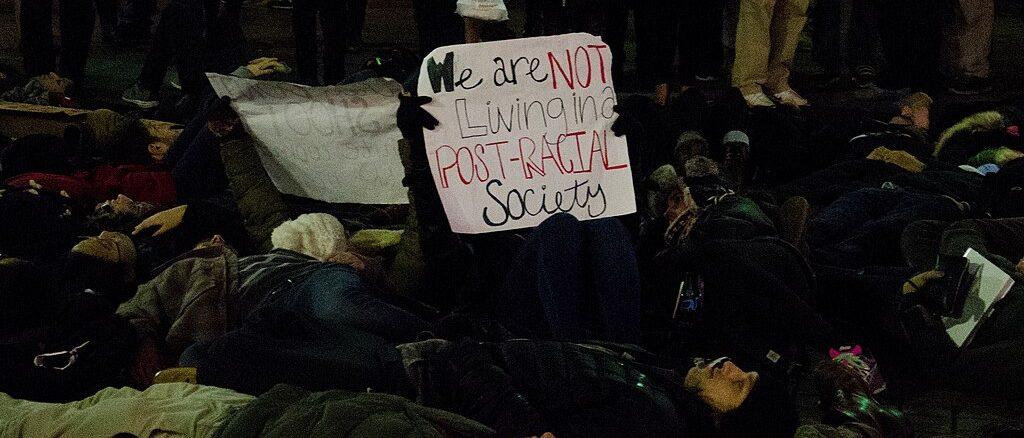
This February, we have the unique opportunity of observing Black History Month by visiting the Black Lives Matter Era Exhibition being held at The Foundry in Kendall Square, Cambridge. This public history exhibit is a community education initiative and is the creation of The Black Response Cambridge (TBR), a civic association of Black and African residents of Cambridge. The exhibition explores a ten year history of Black Lives Matter organizing in Amherst, Boston, Cambridge, Springfield, and Worcester. It examines the rise, impact, and contested legacy of the Black Lives Matter movement from 2013 through the early 2020s, with a particular focus on how the global movement took shape in Massachusetts.
In addition to the exhibition, TBR is holding a community Oxford style debate on February 24, 6 to 8PM, also at The Foundry, located at 101 Rogers St. in Cambridge. This discussion will examine the statement, “The Black Lives Matter Movement was successful.” You can register to attend this event here.
MAPA’s Racial Justice and Indigenous Solidarity working group was fortunate in working with The Black Response Cambridge on our webinar “Slavery’s Enduring Legacy: America’s Unpaid Reparations Debt” in October last year. You can view a recording of the webinar on our YouTube channel. We encourage MAPA members to visit TBR’s exhibition and hope to see you on February 24 for the community debate at the Foundry.