
The Farce of American Diplomacy
American diplomacy isn’t just failing. No one seems to know what it’s supposed to be doing.
By Brian Garvey
The latest round of Iran talks has bounced between negotiations, airstrikes, and ceasefires. Agreements are announced, then denied, then walked back. It’s not clear whether the goal is to reduce tensions, force regime change, show strength, or just keep everyone off balance. American diplomacy is directionless and insincere, a product of improvisation at best.
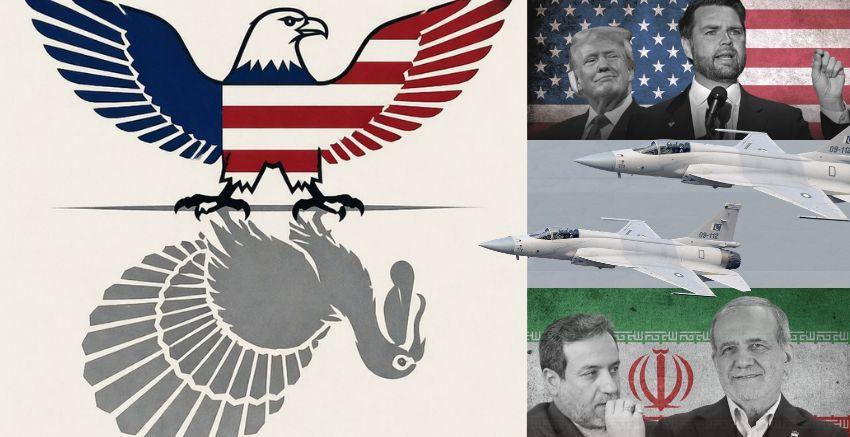
One incident from these talks illustrates the point. When Iranian negotiators flew back from Islamabad, they were escorted by Pakistani fighter jets. This wasn’t a show of honor, but because there were fears the Iranian officials might be killed on the way home. Diplomats needing military protection from the country they’re negotiating with? That speaks to how little trust is left.
The way diplomacy is carried out has changed too. Signals now come through Truth Social posts from President Trump, in the form of expletive laden threats. “Open the f—ing strait, you crazy bastards,” and “a whole civilization will die tonight,” are just two examples. The president demands that Iran comply or face catastrophic consequences. NATO allies have been publicly dressed down. Even the Pope has been pulled into the mix. What used to happen quietly behind closed doors now plays out in public, in language that sounds more like intimidation than diplomacy.
To understand how we got here, it helps to zoom out.
In 1959, historian William Appleman Williams wrote The Tragedy of American Diplomacy, one of the most influential books on foreign policy of the 20th Century. His argument was simple: US foreign policy wasn’t really about spreading democracy. It was about opening markets and securing resources. The “tragedy” was the gap between what the country said it stood for and what it actually did.
But that argument depended on something important, that American leaders believed their own story. That even when they caused harm, they thought they were doing good. That’s simply not the case anymore. This isn’t a tragedy. It’s a farce.
Williams described the “Open Door” as a system where the US pushed other countries to open their economies, whether they liked it or not. It wasn’t old-style empire, but it was still coercive—just masked by language of mutual benefit. Today that mask is off. Allies are threatened with tariffs. Economic ties are exploited. The idea of a shared rules-based system is falling apart. As Canadian Prime Minister Mark Carney put it, the system isn’t transitioning. It’s ruptured.
The difference is clear. Williams’s America ran a kind of confidence game. Most of the American officials running it believed much of the con themselves. Today’s diplomacy looks more like armed robbery.
American policy in the Middle East now openly admits the seizure of oil and land as goals. In June of 2025, the US was in nuclear talks with Iran when Israel launched strikes just days before another meeting, killing many of the negotiators. The US joined in soon after, hitting sites that had been under international monitoring. Betrayals like these not only damage American credibility but also efforts to stop the spread of nuclear weapons. When talks are used as a setup, instead of a solution, reasonable people will consider other ways to deter attacks, including the acquisition of nuclear weapons.
The profit motive is also weakening the credibility of American diplomacy. Around major announcements on Iran, there have been large, well-timed trades in oil markets. Lawmakers are raising concerns about whether people are acting on inside information. Are diplomatic moves shifting markets, or are market moves affecting diplomacy? The perception or impropriety alone is damaging.
In The Tragedy of American Diplomacy, Williams argued that foreign policy served economic interests, not principle. In the farce that is today’s diplomacy, little to no effort is made to hide that fact and, further, the economic interests served aren’t those of the American people, who are suffering increased fuel prices, broad inflation, and flat growth, but of a small group of insider traders.
To understand how we got here, we have to look hard at the last twenty years. After 9/11, the War on Terror expanded presidential power and normalized things that used to be unthinkable—targeted killings, weak oversight, fewer legal limits, and less attention paid to diplomatic agreements. Over time, those practices were normalized. This isn’t about one American president or congress. It’s a pattern.
Barack Obama made major diplomatic achievements by reaching agreements with Iran and Cuba, and signed the Paris Climate Agreement but he didn’t lock these in as binding treaties. That made them easy to undo, and Donald Trump unilaterally withdrew the US from all of them. Despite intense outrage after the 2016 election interference scandal, there was no real push from any American official to negotiate international rules or treaties to stop countries from meddling in the elections of other nations. Donald Trump took these trends further, weakening the State Department and leaning more openly on threats and “maximum pressure.”
Joe Biden didn’t reverse the pattern. He didn’t return to the Iran Deal or fully restore relations with Cuba. He re-entered the climate agreement, but couldn’t codify it. Before Russia invaded Ukraine, there wasn’t serious engagement to address tensions around NATO expansion. After the invasion, early talks didn’t lead to a settlement. Biden used leverage, banning the sale or transfer of US weapons, to curtail Saudi Arabia’s war on Yemen, but didn’t repeat this success to stop Israel’s destruction of Gaza.
Across administrations, the same thing keeps happening. Agreements aren’t made permanent. Diplomacy takes a back seat. Military action and pressure are a reflex, not a last resort. In a way, it’s understandable. Negotiation and diplomacy only works if both sides believe it’s real—if talks are meant to lead somewhere. That belief is fading. Even close allies are starting to hedge, talking more about acting independently instead of relying on the US.
Williams called American diplomacy a tragedy because he thought the country believed in what it was doing, even when it was wrong. That belief is harder to see now. What’s left looks less like tragedy and more like farce—a foreign policy built on bombastic and strange threats, carried out in public, and shaped as much by short-term personal benefit as by long-term societal goals. The result is a world where American diplomacy can’t be trusted, or even taken seriously.
It doesn’t have to stay this way. But as long as diplomacy is treated as just another tool for domination, instead of a way to actually solve problems, it probably will.
—
Brian Garvey is the Executive Director of Massachusetts Peace Action