Amplifying the Narrative: Cuba deserves to live free of US strangulation and imposition
“Nobody should have to be resilient just to be able to get to tomorrow”
– Danny Valdes, Cuban Americans for Cuba
Those were the words of Danny Valdes, prominent DSA member and the founder of Cuban Americans for Cuba on returning from three days in Cuba with the Nuestra América Convoy.
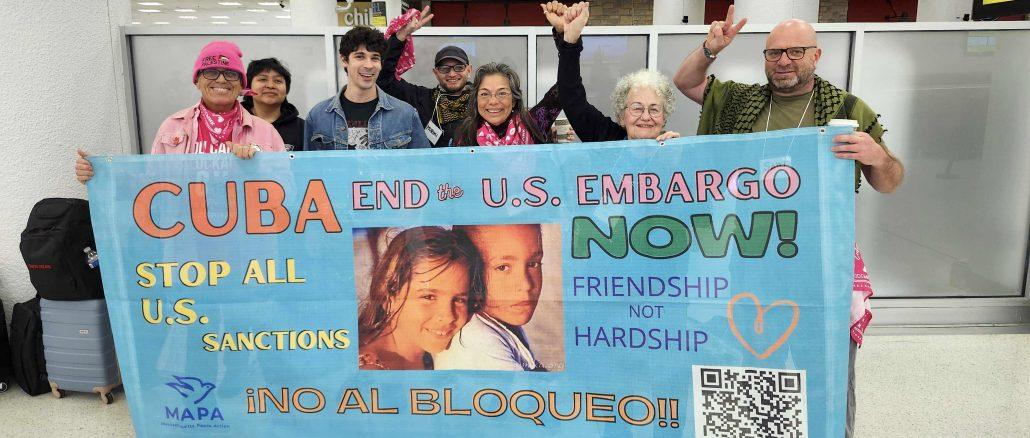
From March 20 to 23rd, I joined the convoy with the Code Pink delegation of 160 people from a many different U.S. organizations. We were there to deliver aid, express our solidarity, and protest the US oil blockade. In place since January 29th, the fuel blockade had worsened the already harsh conditions created by the longstanding economic embargo and sanctions.
The Nuestra América Convoy of some 600 people from 36 countries arrived in Cuba over the weekend of March 21st by ship and by plane, bringing twenty tons of humanitarian aid, which included medicine, medical equipment, solar panels, bicycles, and school supplies. With President Trump’s declaration of Cuba as “a hostile country” and imposition of the full blockade of fuel deliveries to the island, humanitarian and economic conditions had reached crisis point. The oil blockade has been broken just once, this week, by a Russian tanker bringing about ten days of fuel to Cuba.
The Cuban economy had already been worsened by the Covid pandemic which prevented Cuba from receiving hard currency needed to buy necessary goods and fuel while eating up enormous reserves in order to maintain the population during the extended lockdown and attend to their health needs. This situation was then worsened by the continuing world economic crisis that followed the pandemic, as well as by US sanctions imposed on friendly trading partners like Venezuela and Russia, in additional to the sanctions, embargo and punitive measures already in place on Cuba for decades.
The crisis affects every aspect of people’s lives in Cuba: electricity, transportation, water delivery systems, hospital and medical services, refrigeration, agricultural and other production, telephone and internet services, and all the other aspects of modern life that a developed but poor country like Cuba depends on.
The Code Pink contingent in which I represented MAPA, brought 6,000 pounds of aid directly to the Ministry of Health and other ministries for equitable distribution throughout the country. We then spent our three days there delivering additional aid we had hand carried to hospitals and small clinics, schools and community groups. These included the Fajardo Hospital, to which Mass Peace Action has been donating since 2025, and a neighborhood family doctor’s office that Mass Peace Action has been contributing to since 2022. The US group also participated in painting a giant mural in a park between the Malecon sea wall and the Almejeiras hospital, joined a block party in a traditionally low income community, and met with five groups representing Havana’s gay, queer, and trans communities. Nuestra América was joined by Irish rap group Kneecap who performed at a multigenerational party and concert in the heart of the city. We also attended two formal ceremonies where elected officials and heads of unions, solidarity and political organizations from several of the 36 countries represented spoke. President of Cuba Miguel Diaz-Canal addressed the group and thanked us for our solidarity.
What was our impact? Besides bringing significant amounts of aid to Cuba, we also were able to get to know Cuban people and hear from them how much our coming meant to them. Moreover, we contributed to the popular narrative and awareness in countries around the world and in the US of the damaging effects of the US embargo and sanctions. An analysis of the digital impact of the brigade by the Cuban online newspaper Cubadebate said:
“While aid highlighted the problem in its most tangible dimension, solidarity gave it emotional endurance and collective legitimacy. The presence of figures like Jeremy Corbyn, Pablo Iglesias, Clara López, Chris Smalls, and others helped transform the mission into a visible display of internationalism. Thus, the conversation revolved not only around what arrived in Cuba, but also around who stood with Cuba and what that support meant in the political context of the time.
“The issues of health, the elderly, and children reinforced the humanization of the crisis. The debate shifted from focusing solely on macroeconomic or diplomatic terms to centering on concrete bodies, urgent needs, and vulnerable populations. This transformation helped the convoy gain public legitimacy and emotional resonance. The Cuban crisis thus ceased to be presented as an abstract ideological issue and began to appear as a situation of human suffering that demanded a response.”
—Cubadebate, Solidarity does Communicate
The task before us now is to continue to amplify the message of the humanitarian right of all of Cuba to survive and to thrive. We must amplify the message with our members, and our members’ friends and neighbors. We must amplify the message with our elected officials as in the end, while Trump has the power to ease the punitive measures he’s taken against Cuba, it is only Congress that can demand from our government a just and equal treatment of Cuba, respecting its sovereignty and self determination.
Take the following actions now:
Tell all members of the Massachusetts Congressional Delegation to support the following bills:
Lift the Embargo of Cuba H.R. 7521 and S.136
Respect the Constitution and the War Powers Resolution, S.J. Res 124 and H.R. Res 153
Demand your representatives vote “YES” on prohibiting military agression against Cuba
Call: Rep Jim McGovern: 202-225-6101 Rep Richard Neal: 202- 225-5601
April 8, 8 pm: Cuba Under Siege, What’s Next? With leading Cuban political analyst Rafael Hernández
April 14 – Cuba Advocacy Day. Join Code Pink and other national organizations in Washington
April 22, 8 pm: ¡Cuba Sí, Bloqueo No! With Medea Benjamin, co-founder of Code Pink, and Danny Valdes, DSA and Cuban-Americans for Cuba (details to be confirmed)
by Merri Ansara