
by Lila Li
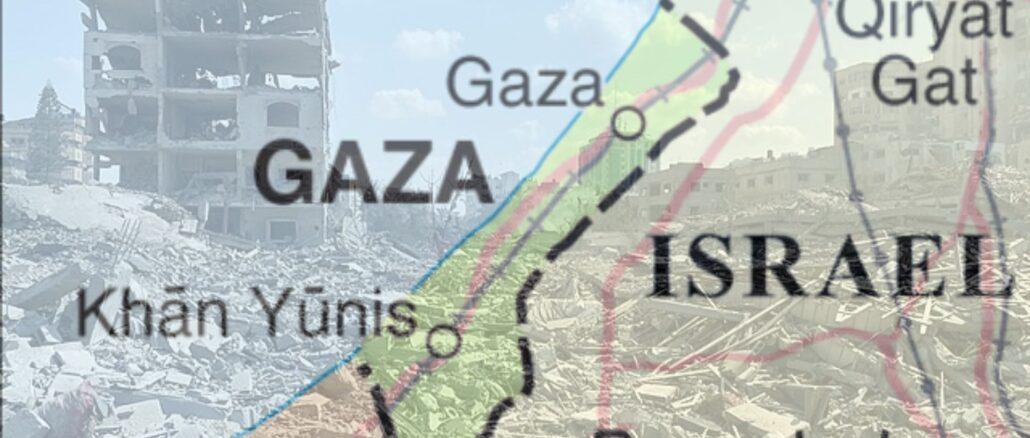
On January 15th, Israel and Hamas reached a ceasefire deal, halting fifteen months of conflict in the Gaza Strip that killed over 47,000 people. Over half of them were women, children, or older people. The territory is devastated. At the time of the agreement, 94 Israeli hostages were still in Gaza, while thousands of Palestinians remained in Israeli prisons. The deal encompasses three phases intended to oversee an end to fighting, the return of the Israeli hostages in exchange for Palestinian prisoners and detainees, an increased flow of aid to Gaza, the withdrawal of Israeli forces from the Strip, and the reconstruction of Gaza.
The first six-week phase of the deal outlines a complete ceasefire, along with the return of 33 Israeli hostages at regular intervals—limited to women, children, the elderly, and the sick—in exchange for the release of nearly 1,900 Palestinian prisoners, many of them wrongfully detained women and children, and others convicted in deadly attacks and set to be deported upon their release (BBC). In particular, 30 prisoners will be released for each civilian hostage, and 50 for each female soldier (Associated Press). Israeli forces will also withdraw from populated areas to the edges of the Gaza Strip, opening the east-west Netzarim Corridor and allowing displaced Palestinians to begin returning to the north. At the same time, humanitarian aid shipments will be increased to hundreds of trucks per day. Details on the condition of the Israeli hostages have been limited besides their being confirmed to have been in “stable conditions.” Meanwhile, released Palestinian prisoners report neglect and violence during their detainment (BBC, Washington Post).
The second phase will see the declaration of a complete and sustainable ceasefire, the full withdrawal of Israeli troops from the Gaza Strip, and the release of all remaining male hostages in exchange for a still-unspecified number of Palestinian prisoners. In the third phase, all remaining bodies of deceased Israeli hostages will be exchanged for those of Palestinian fighters and the implementation of a years-long plan for the reconstruction of Gaza.
The first phase has already seen multiple interruptions that threaten the deal’s stability. The week of January 19, Israel cited a Hamas delay in releasing a fourth hostage to justify its blockade that left tens of thousands of frustrated Palestinians stuck at the Netzarim Corridor for forty-eight hours before being allowed passage. At the same time, the ceasefire between Israel and Hezbollah—reached in November 2024—has faced delays and conflicts in the past week centering around Israel’s resistance to leaving southern Lebanon. That suggests Israel will be wary of fully disengaging from conflict zones without guarantees of long-term stability, possibly translating into its approach to the Gaza ceasefire as well.
Meanwhile, the Israeli military’s ongoing operation in the West Bank poses another potential threat to the integrity and sustainability of the Gaza ceasefire. Dozens of Palestinians have been killed in the operation since last Tuesday as Israel seeks to eliminate the militant factions that flourish in Jenin (Associated Press, CNN). The Gaza ceasefire has enabled the Israeli military to focus on the West Bank, and the Israeli defence minister said their forces were applying lessons learned in Gaza to the Jenin operation (Reuters). When paired with recent aggressive settlement efforts, it is likely that heightened tensions could endanger the ceasefire.
It remains unclear whether the second phase of the deal will be executed. Israel and Hamas, as well as the deal’s mediators—the U.S., Egypt, and Qatar—must agree on a deal for the second phase before the end of the first phase. Negotiations for the second phase are supposed to start on day 16, or February 4. Hamas has asked the mediators for written confirmation that the ceasefire will persist until a deal has been reached, but have only received verbal confirmation (Associated Press).
Israeli Prime Minister Netanyahu faces a crossroads on whether to follow through with the deal. He faces mounting international pressure to put an end to the war, and increasing criticism from Israelis calling for a deal that returns all the hostages. Yet remaining committed to the deal could threaten his leadership, as political extremists push for a return to fighting. National security minister Ben-Gvir and his far-right Otzma Yehudit party left the Knesset—the Israeli governing coalition—after the ceasefire deal was signed on the morning of January 19, calling the deal “reckless” and citing displeasure with the release of Palestinian prisoners, as well as unmet objectives for the destruction of Hamas (Haaretz). Finance minister Bezalel Smotrich and his party, Religious Zionism, likewise threatened to abandon the coalition if fighting did not resume after the first phase, but withdrew their threat on January 27.
Yet for the 1.9 million Palestinians who have been internally displaced by the war, even those now returning home cannot expect to resume life as usual. Most have lost loved ones; almost 1500 families have been wiped completely from the civil registry (Middle East Eye). The majority of buildings—90 percent of houses and 50 percent of hospitals—in the Gaza Strip have been devastated; 1.8 million people are facing high levels of acute food insecurity as Gaza’s economy endures what the World Bank describes as “the largest economic contraction on record,” and almost 100% of the population is living in poverty (BBC).
Instead of returning to the homes, hospitals, schools, and shops they left behind, Palestinians will return home to fifty million tons of rubble, assisted by nothing but hope to help them rebuild.
—
Lila Li is an intern at Massachusetts Peace Action passionate about international human rights law